
Research report · July 2025
Access to Basic Services Amid Climate, Conflict and Displacement.
Community-level evidence on water, healthcare, education and protection across six states in Northwest Nigeria.
Overview
Climate shocks are intensifying pressure on essential services.
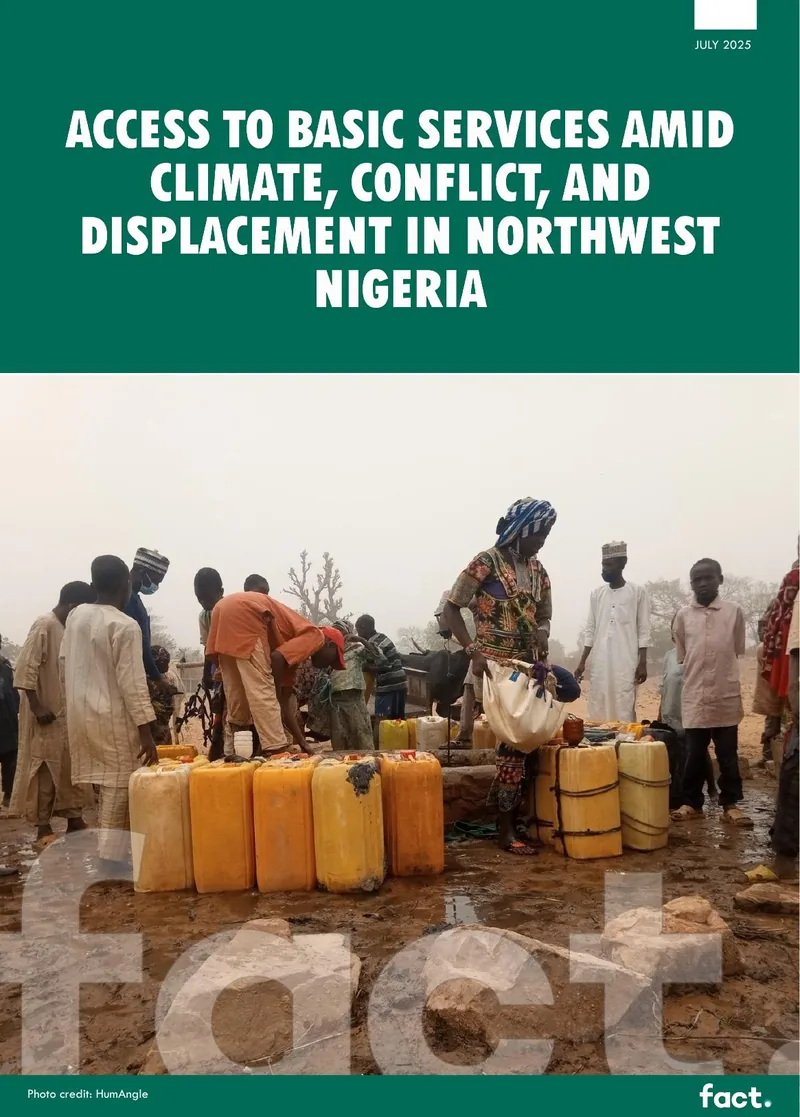
Northwest Nigeria is experiencing the combined effects of climate change, protracted insecurity and displacement. Flooding, drought, erratic rainfall and rising temperatures are disrupting livelihoods while increasing pressure on water, healthcare, education and community-protection systems.
This factsheet examines how those pressures are experienced across urban and rural communities, with particular attention to groups facing heightened barriers, including displaced households, women and girls, children and people with disabilities.
Key findings
Access exists, but functionality and reliability remain uneven.
Climate drives vulnerability
Flooding and drought compound water scarcity, income loss, reduced crop yields, rising food prices and displacement.
Water pressures create tension
Communities reported longer journeys to water and disputes around shared sources, irrigation and livestock watering points.
Distance limits healthcare
Facilities are present in many communities, but travel time and non-functional centres continue to restrict timely access.
Education remains disrupted
Costs, insecurity, household labour demands and distance prevent children from attending school consistently.
Selected indicators
A snapshot of displacement and basic-service access.
Displacement
40%reported that households in their community had been displaced during the previous two to three years.Water access
59%reported longer walking distances to water during the preceding 12 months because of drought or reduced sources.Healthcare
79%reported a functional health facility in their community, although access varied considerably by state.Education
86%reported a functional school, while cost, safety and distance continued to affect attendance.Protection
64%reported a community protection structure; only about half of those structures were described as fully functional.Markets
83%reported a functioning market in or near the community for food and essential items.These figures reflect key informants’ community-level observations. State breakdowns, question wording and additional findings are available in the full report.
Methodology
Community-centred evidence across urban and rural locations.
The assessment used quantitative and qualitative methods. Between April and May 2025, FACT conducted 508 community-based key-informant interviews across 481 communities in 138 LGAs.
Community leaders, farmers, market actors and other informants were purposively selected to provide grounded perspectives on climate impacts, essential services and local adaptation strategies. Urban and rural communities were represented, with security constraints considered throughout implementation.
- Jigawa: 26 LGAs and 83 communities
- Kano: 36 LGAs and 115 communities
- Katsina: 30 LGAs and 110 communities
- Kebbi: 14 LGAs and 61 communities
- Sokoto: 20 LGAs and 73 communities
- Zamfara: 12 LGAs and 39 communities