
Research report · January 2026
Economic Empowerment Initiatives for Women, Men and Youth.
Participant experiences, outcomes and perceptions across Northeast and Northwest Nigeria.
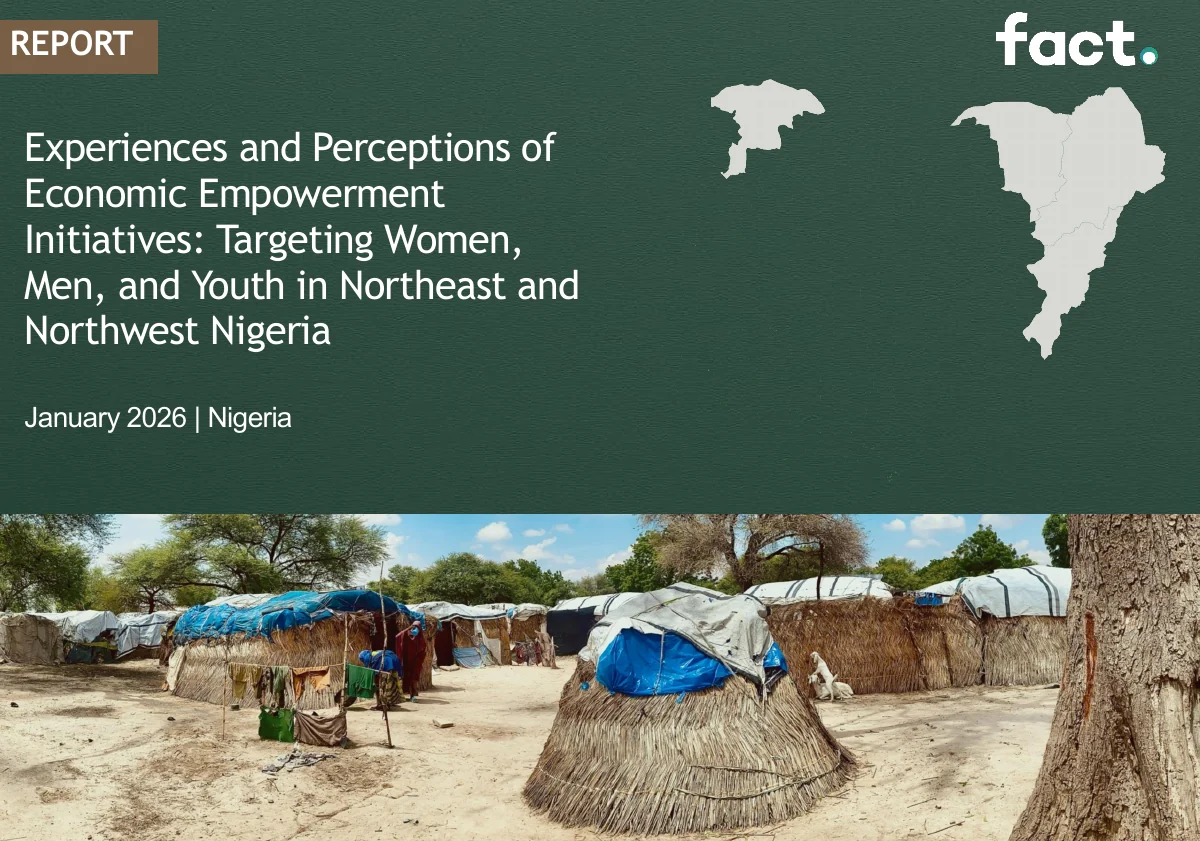
Overview
Economic empowerment is improving income, skills and resilience.
This assessment explores how women, men and youth experience initiatives delivered by humanitarian and development actors in Northern Nigeria. It considers relevance, inclusivity, sustainability and the contribution of livelihood support to wellbeing under insecurity, economic pressure and climate variability.
Key findings
Participants reported broad gains across economic and household outcomes.
Income increased
92% of participants reported an increase in income after joining an initiative.
Skills are in use
65% reported regularly applying newly acquired skills.
Inclusive programming
95% believed programmes fully included women, youth and minority groups.
Conditional sustainability
87% considered benefits at least somewhat sustainable, while noting the need for finance and follow-up.
Methodology
Mixed methods captured outcomes and lived experience.
FACT mapped 14 projects implemented by 10 partners and surveyed 1,747 beneficiaries: 52% women, 21% men and 27% youth. Eight key informant interviews and seven focus group discussions provided additional community and stakeholder perspectives.
Projects were purposively selected, while beneficiaries within selected projects were randomly sampled. Findings are indicative and based on self-reported outcomes rather than measured causal impacts.
Programming priorities
Reinforce approaches that help benefits endure.
- Connect practical, market-relevant skills training to finance and start-up support.
- Provide follow-up mentoring and stronger market linkages.
- Maintain fair, transparent and community-supported selection processes.
- Adapt delivery to insecurity, climate shocks and household responsibilities.