
Success story · Humanitarian accountability
Turning community evidence into stronger humanitarian action.
How FACT’s independent monitoring helped FCDO and its partners verify delivery, identify risks and adapt programmes to the realities of crisis-affected communities.
Background
Meeting urgent needs while strengthening long-term resilience.
The Humanitarian Assistance and Resilience Programme responds to the immediate and longer-term needs of crisis-affected people across Borno, Adamawa and Yobe. FCDO works through UN agencies, international organisations and national actors to support food assistance, healthcare, shelter, protection and livelihood recovery.
Because effective humanitarian action depends on quality, transparency and responsiveness, FCDO commissioned third-party monitoring to independently verify programme delivery. FACT served as the operational lead for field monitoring of interventions implemented by UNICEF, the World Food Programme and CARE International.
The challenge
A prolonged crisis demands timely and independent visibility.
Years of conflict have driven displacement, weakened essential services and exposed communities to food insecurity, disease outbreaks, protection risks and climate-related shocks. Humanitarian organisations must operate amid insecurity, changing access conditions and constrained resources.
In this environment, limited real-time verification can obscure whether assistance reaches people as intended. Weak community-feedback pathways can also delay the identification of delivery gaps, protection concerns and emerging operational risks.
Third-party monitoring created an independent feedback loop between programme delivery, community experience and adaptive decision-making.
Monitoring framework
Three connected methods created a fuller picture.
FACT tailored monitoring to the sector focus of each implementing partner. The framework examined programme quality, accountability to affected populations, safeguarding, fraud risks and barriers facing vulnerable or marginalised groups.
Light-Touch Verification
Rapid quantitative interviews verified delivery, beneficiary reach, access and awareness of entitlements.
Risk Monitoring
Focus groups and key-informant interviews explored protection, operational and community-level risks.
Flash Reporting
Rapid reports documented suspected misconduct, fraud and safeguarding concerns identified in the field.
Learning
Dashboards, reports and joint workshops translated evidence into programme reflection and adaptation.
FACT’s role
Field evidence built around the voices of affected people.
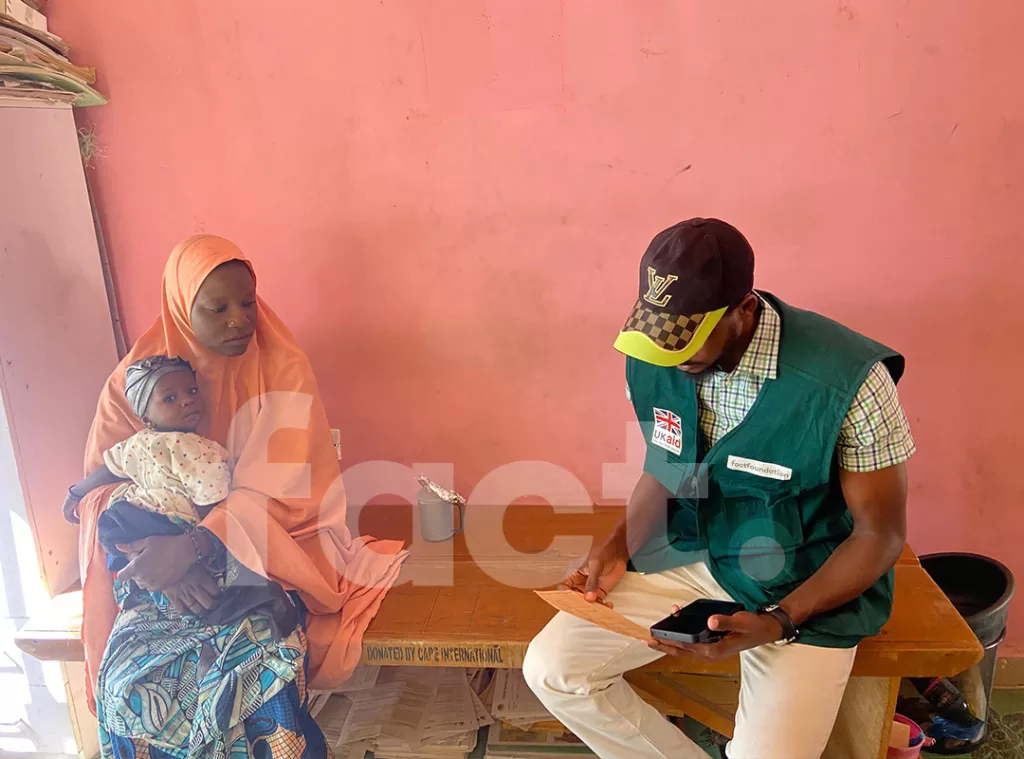
FACT deployed trained teams to conduct monitoring activities under FCDO’s terms of reference. Beneficiary interviews, focus-group discussions, key-informant interviews and field debriefs captured direct experiences of service delivery, targeting, protection and access to feedback mechanisms.
FACT’s field and data responsibilities included:
- Reviewing contextual and programme risks across targeted BAY-state LGAs.
- Conducting rapid quantitative verification across HARP implementation areas.
- Engaging community leaders, women’s representatives, youth, volunteers, aid workers and beneficiaries.
- Translating and transcribing qualitative discussions for analysis and reporting.
- Validating risks with implementing partners and identifying emerging concerns.
- Participating in learning and closeout workshops to support adaptive programming.
Results
Monitoring that reinforced transparency, learning and responsiveness.
FACT completed multiple rounds of verification, risk monitoring and flash reporting across more than 30 LGAs. Monitoring covered food security, nutrition, livelihoods and protection activities delivered through UNICEF, WFP and CARE International.
Approximately 4,000 structured engagements with community members, assistance recipients and frontline workers generated quantitative and qualitative evidence. Findings were synthesised into reports, interactive dashboards, learning briefs and joint reflection sessions that supported programme decisions.
Community feedback highlighted both progress and areas requiring attention. FACT’s recommendations included stronger pre-distribution communication, expanded outreach and clearer complaints and feedback mechanisms.
Why it matters
Accountability works best when communities shape the evidence.
HARP-TPM demonstrated the value of neutral, community-centred monitoring in fragile settings. By connecting independent verification with lived experience, FACT helped partners strengthen transparency, identify gaps and keep humanitarian assistance responsive to the people it was designed to serve.