
Success story · Third-party monitoring
Community-centred monitoring for resilience and social cohesion.
How FACT generated independent evidence and beneficiary insights for the UNICEF–WFP PEACE Project in Northeast Nigeria.
Background
An integrated programme supporting services, resilience and cohesion.
The UNICEF–WFP Resilience and Social Cohesion (PEACE) Project was designed to build resilience for children, women and men at individual, household, community and institutional levels. It supported equitable services and social cohesion through interventions spanning WASH, health, nutrition, education, protection, livelihoods and conflict resolution.
UNICEF commissioned independent third-party monitoring in Bade and Shani LGAs to verify implementation and keep community experience central to programme learning.
The challenge
Complex conditions limit visibility into programme delivery.
Conflict, displacement, food insecurity, disease outbreaks and climate shocks continue to disrupt access to essential services across Northeast Nigeria. Insecurity, fluctuating access and constrained resources make real-time verification and community feedback difficult.
Independent monitoring created a practical bridge between programme implementation, community realities and adaptive decision-making.
FACT’s approach
Two monitoring streams combined verification with lived experience.
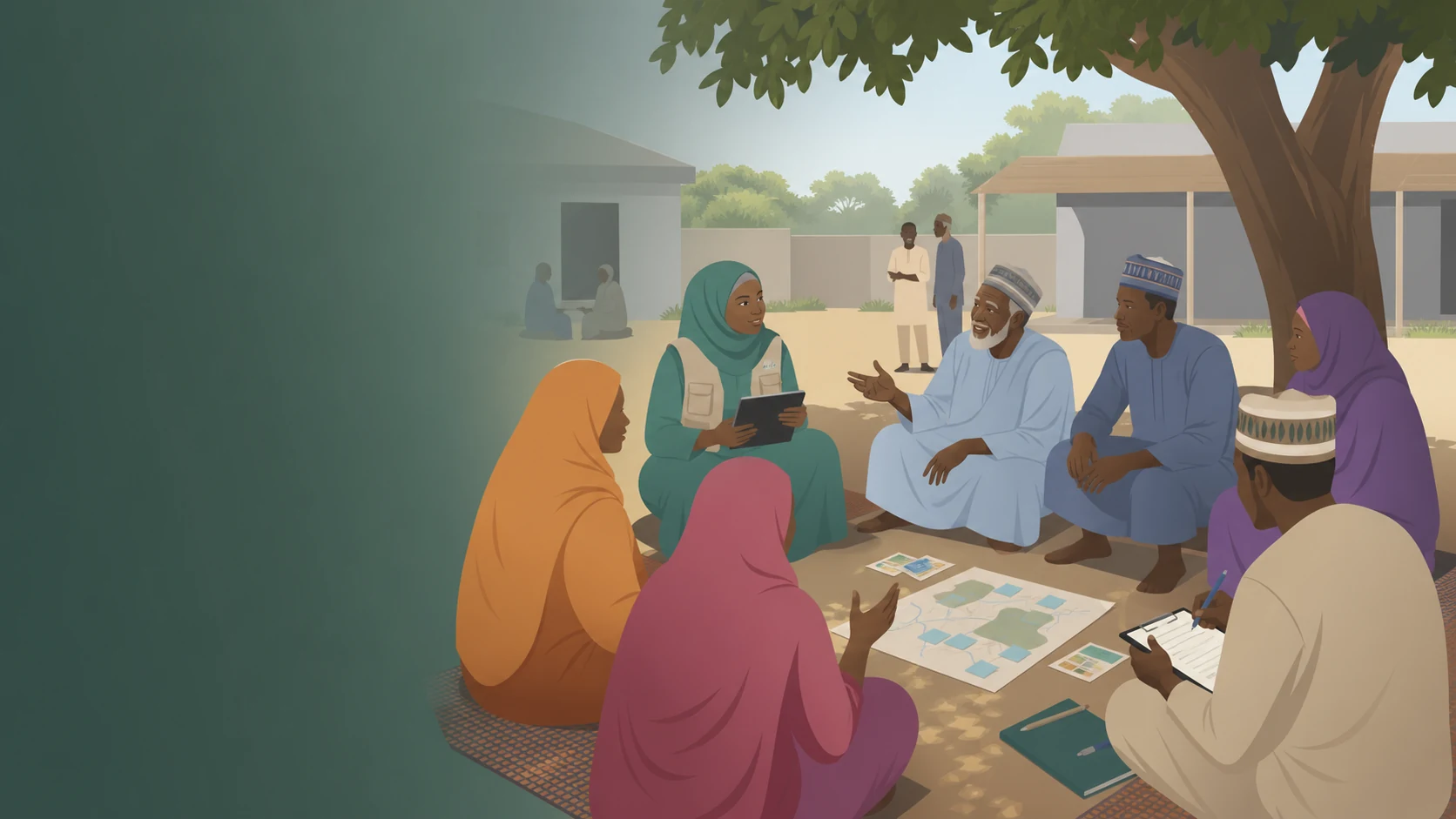
Quarterly Pulse Checks combined household and individual interviews, key informant interviews, focus groups and direct observation. A User Journey stream used Most Significant Change interviews and social listening to follow beneficiary experiences and behavioural change over time.
Verify
Observed WASH, education and health activities on site.
Listen
Engaged women, men, girls, boys and community stakeholders.
Track
Followed user journeys and significant changes over successive quarters.
Learn
Consolidated findings into four quarterly reports and trend analysis.
Results
Evidence supported accountability and adaptive programming.
Across one year, FACT engaged 3,017 individuals and households, including adolescents, pregnant women, lactating mothers and household representatives. Monitoring also included 192 key informant interviews, 32 focus group discussions, 16 direct observations and Most Significant Change interviews with more than 24 beneficiaries.
The evidence documented programme performance and community outcomes across seven sectors. Quarterly reporting and trend analysis highlighted progress, emerging patterns, operational gaps and areas requiring adaptation, while a short documentary amplified community experiences and positive change.
Why it matters
Accountability is stronger when community voices shape the evidence.
The monitoring process gave programme stakeholders an independent view of delivery and outcomes while making affected populations' experiences visible. This strengthened transparency, learning and evidence-based decisions across the target communities.