
Success story · Third-party monitoring
Strengthening accountability across WFP operations in Borno State.
How independent field monitoring helped verify assistance, elevate beneficiary perspectives and generate practical evidence for programme improvement.
Background
Monitoring food assistance in a complex operating environment.
The World Food Programme’s 2023–2027 Country Strategic Plan supports crisis-affected communities through food assistance, cash transfers, nutrition services, capacity building and livelihood opportunities. In Borno State, these activities reached communities across Bayo, Biu, Damboa, Hawul, Kwaya Kusar and Shani.
FACT Foundation partnered with WFP to provide independent third-party monitoring in these operational areas. Monthly work orders guided visits to distribution points, retailer outlets, nutrition sites, warehouses and locations supporting livelihood activities.
The challenge
Access constraints can create gaps between delivery and evidence.
Conflict, displacement, damaged infrastructure and restrictions on movement continue to affect livelihoods and humanitarian access across Northeast Nigeria. Poor road conditions and security concerns can make some implementation locations difficult to reach, even as communities face severe food insecurity and malnutrition.
Reliable field evidence was essential for understanding whether assistance reached people as intended—and how delivery could be made safer, more accountable and more responsive.
FACT’s approach
Independent monitoring centred on quality and beneficiary experience.
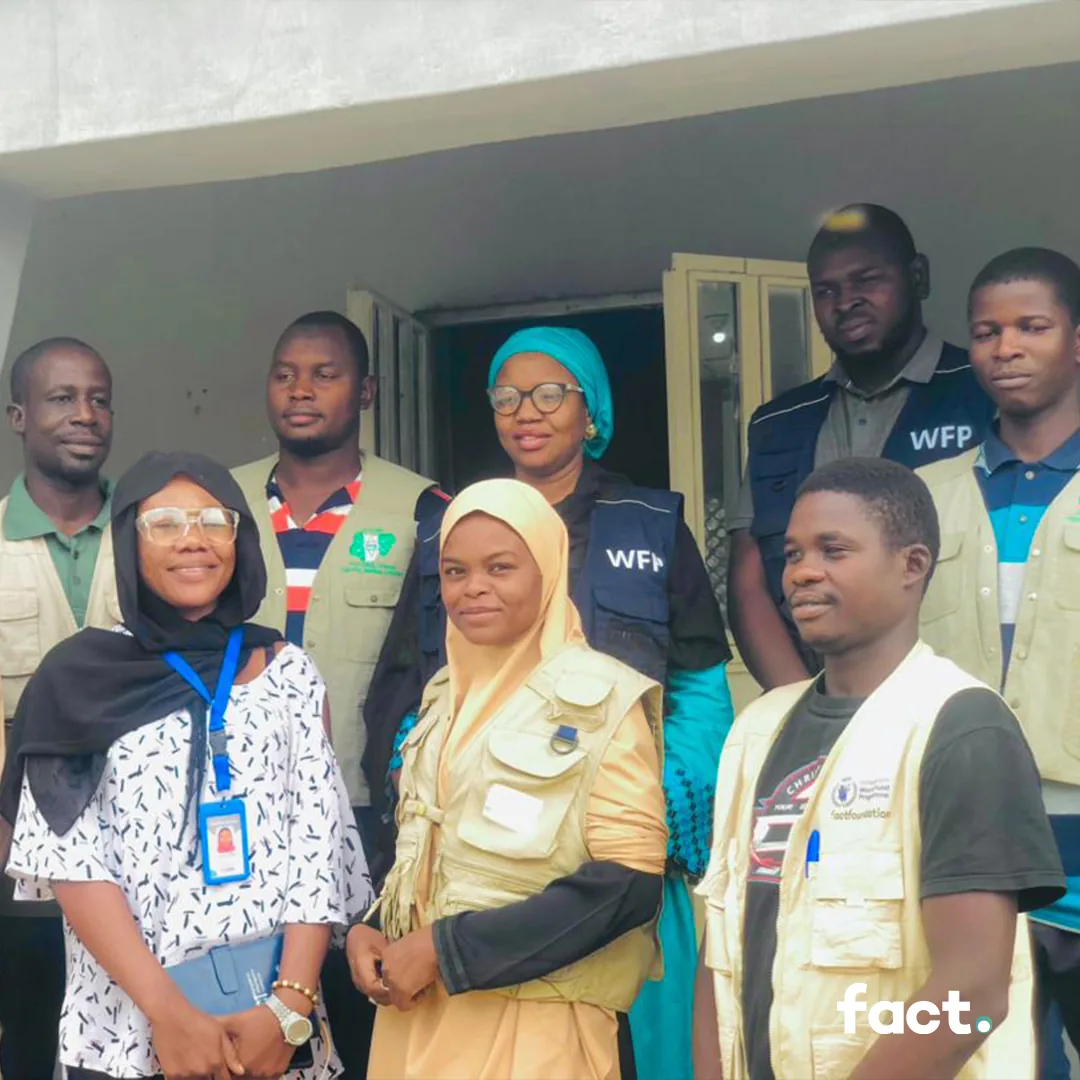
FACT deployed experienced monitoring teams with an established field presence in Northeast Nigeria. Working to WFP’s monitoring requirements, the teams assessed programme delivery, identified operational risks and captured beneficiary feedback on how services could improve.
The work combined process and outcome monitoring. Teams verified whether activities followed expected standards while examining programme quality, accountability to affected populations, protection, neutrality, confidentiality and fraud-risk mitigation.
Verify
Observe delivery and check adherence to programme guidance.
Listen
Gather beneficiary perspectives through structured interviews.
Debrief
Share observations with operational and government stakeholders.
Improve
Turn field evidence into actionable programme learning.
What was monitored
A broad view of assistance, nutrition and livelihoods.
Monthly assignments covered distribution and service-delivery activities across the six LGAs, including:
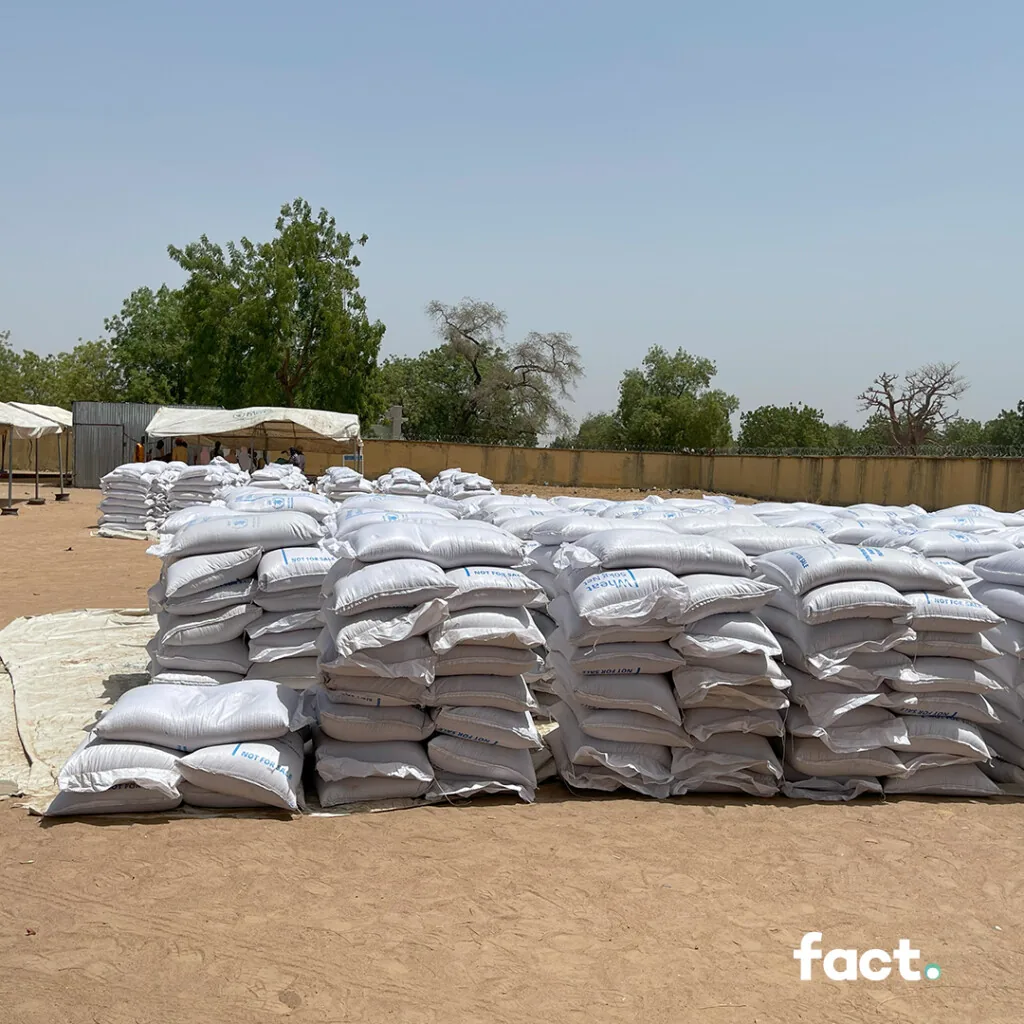
- E-voucher distributions for children aged 6–23 months and pregnant or breastfeeding women and girls.
- Cash-based transfers and in-kind unconditional resource transfers for new arrivals.
- Targeted supplementary feeding for children aged 6–59 months.
- Retailer performance, market-price data and warehouse monitoring.
- Crop and livestock production, income-generation and natural-resource management activities.
Results
Evidence that strengthened visibility and accountability.
Across ten months of field activity, FACT monitored 639 of 830 assigned sites and locations—a reported coverage rate of 77%. Teams conducted 3,490 beneficiary interviews and participated in coordination and debrief sessions with WFP, cooperating partners and government stakeholders.
These engagements gave WFP direct insight into beneficiary experience, implementation quality and issues observed at distribution sites. Findings could then be discussed with responsible teams and used to strengthen follow-up, risk mitigation and decision-making.
Why it matters
Monitoring becomes valuable when evidence moves into action.
The project demonstrated how an independent field presence, reliable communication and structured feedback can improve visibility across hard-to-reach operations. FACT’s monitoring helped connect programme standards with realities at delivery sites, while keeping the experiences of affected people central to learning and accountability.